
The Margins of Silence Review:
A Smart, Atmospheric Cozy Mystery with Real Emotional Stakes
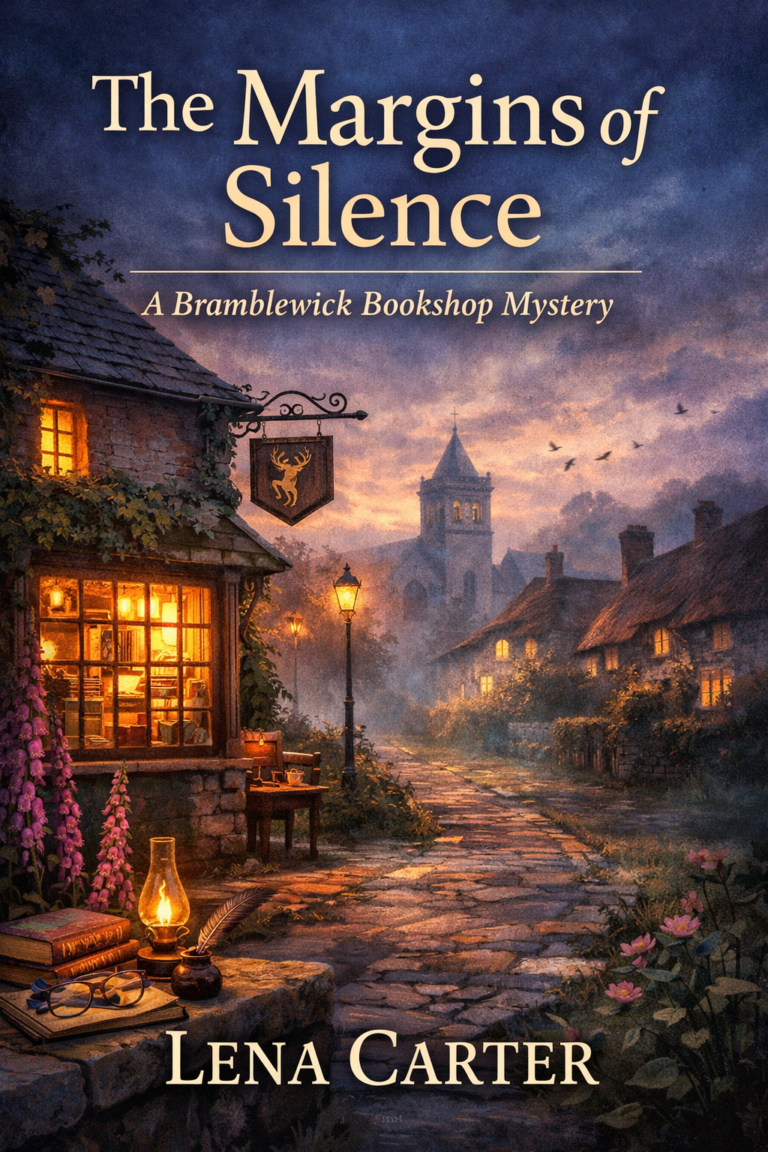
Is The Margins of Silence worth reading?
Yes—especially if you enjoy slow-burn cozy mysteries set in British villages, with layered characters, hidden land secrets, and a morally complex villain.
The Margins of Silence: A Bramblewick Bookshop Mystery by Lena Carter delivers everything readers expect from a traditional cozy mystery—charm, community, and clever clues—while raising the emotional and ethical stakes far beyond a simple whodunit.
If you’re searching for a cozy mystery with depth, this book stands out.
What Is The Margins of Silence About?
The story follows Edmund Pargeter, a retired London editor who moves to the marshland village of Bramblewick to open a small independent bookshop. He expects a quiet life filled with secondhand novels and tea-stained conversations. Instead, he becomes entangled in a decades-old land scandal when a local historian collapses during a book talk—just as he is about to reveal explosive information.
As Edmund investigates, he uncovers:
- Missing parish deed records from 1953
- A sealed letter marked with a stag emblem
- Suspicious connections between land transfers and a powerful village family
- Evidence suggesting the death may not have been natural
What begins as a village tragedy unfolds into a tightly constructed mystery involving fraud, inheritance, reputation, and the dangerous power of narrative control.
What Makes This Cozy Mystery Different?
Many cozy mysteries focus primarily on puzzle mechanics. The Margins of Silence does that well—but it also explores something deeper:
How far should someone go to protect a community?
The central antagonist is not cartoonishly evil. Instead, the novel presents a morally complicated character who believes they are preserving stability. This elevates the book beyond a simple “good versus bad” framework and turns it into a thoughtful meditation on justice versus loyalty.
The mystery is rooted in:
- Historical land manipulation
- Village politics
- Reputation management
- Generational inheritance of wrongdoing
Rather than relying on shock value, the story builds tension through conversation, withheld information, and subtle psychological shifts.
Is This a Traditional Cozy Mystery?
Yes—but with substance.
It includes all the classic cozy elements:
- Small English village setting
- Amateur sleuth (retired editor, not a detective)
- Tight-knit community dynamics
- Non-graphic, non-violent tone
- Tea rooms, parish councils, and bookshop ambiance
However, it also deepens the genre with strong thematic focus. The mystery unfolds through archival research, ink analysis, witness testimony, and carefully staged conversations rather than action-heavy confrontation.
Readers who enjoy authors like Agatha Christie, Richard Osman, or classic British village mysteries will find familiar comforts here—alongside a more emotionally layered conclusion.
Who Is the Main Character?
Edmund Pargeter is one of the book’s greatest strengths.
As a former editor, he approaches crime the way he once approached manuscripts—by looking at margins, inconsistencies, and structural flaws. He isn’t physically imposing or particularly daring. Instead, his intelligence lies in noticing what doesn’t align.
He is:
- Observant rather than aggressive
- Moral but not naïve
- Quietly stubborn
- Deeply uncomfortable with public conflict
This makes his transformation from peaceful bookseller to reluctant truth-teller both believable and compelling.
Readers who appreciate character-driven mysteries will find Edmund especially satisfying.
How Is the Setting Used?
Bramblewick is not just a backdrop—it’s a character.
The marshland atmosphere, rain-slicked cobblestones, and carefully maintained reputations create a setting where secrets can survive for decades. The author uses sensory detail effectively: beeswax polish, chamomile tea, damp wool coats, and parish archive dust all reinforce the cozy aesthetic while hinting at hidden rot beneath it.
The village setting raises the stakes in a unique way: exposing the truth doesn’t just catch a killer—it disrupts an entire community structure.
This creates emotional tension beyond the crime itself.
Is the Mystery Satisfying?
Yes, and in a way that rewards attentive readers.
Clues are planted carefully:
- Violet ink inconsistencies
- Missing deed copies
- A sealed confession letter
- A pattern of land transfers
- Controlled medical knowledge
The final confrontation is not explosive—it’s controlled, deliberate, and public. The truth emerges in a community setting, which feels thematically appropriate for a story about shared silence.
The ending answers the central question while leaving room for future installments in the Bramblewick Bookshop Mystery series.
What Themes Does the Book Explore?
The Margins of Silence explores several layered themes:
- Truth versus stability
- Inherited guilt
- Moral compromise
- Community loyalty
- The power of narrative control
The novel asks whether preserving peace is always virtuous—or whether silence becomes complicity when it protects injustice.
For a cozy mystery, the philosophical undertone is surprisingly strong without ever feeling heavy-handed.
Who Should Read This Book?
You’ll likely enjoy The Margins of Silence if you:
- Love cozy mysteries with depth
- Prefer psychological tension over gore
- Enjoy small-town secrets
- Appreciate slow-burn pacing
- Like intelligent, conversation-driven plots
- Want clean mystery fiction without graphic violence
It’s especially suited for readers who enjoy character dynamics and moral complexity alongside classic whodunit structure.
Final Verdict: Is It Worth Buying?
Yes.
The Margins of Silence succeeds because it balances comfort and consequence. It delivers the familiar pleasures of a British village mystery while tackling meaningful questions about legacy, responsibility, and the cost of silence.
It’s atmospheric without being slow, thoughtful without being preachy, and suspenseful without relying on shock.
If you’re looking for a cozy mystery that lingers after the final page—one that makes you reconsider what “protecting a community” really means—this book deserves a place on your shelf.
And if Bramblewick returns in future installments, readers will almost certainly follow.