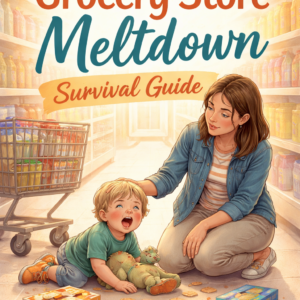
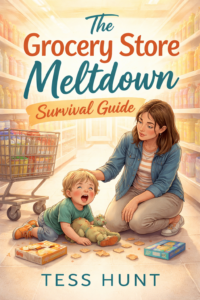
 Parenting toddlers in public can feel like walking into a social experiment you didn’t agree to participate in. The Grocery Store Meltdown Survival Guide by Tess Hunt is a practical, compassionate parenting book that tackles one of the most searched parenting challenges today: how to handle toddler tantrums in public.
This review explores what the book teaches, who it’s for, how it approaches toddler public tantrums, and whether it delivers actionable calm parenting strategies that actually work.
What Is The Grocery Store Meltdown Survival Guide About?
This book is a short, focused parenting guide designed specifically for parents who dread taking their toddler into public spaces. It addresses:
- Public tantrums in grocery stores, restaurants, parks, and events
- Hidden triggers behind toddler meltdowns
- De-escalation techniques that work in real time
- Building a portable “calm-down toolkit”
- Reducing parental anxiety about public judgment
Unlike many general parenting books, this one narrows in on a highly specific pain point: toddler meltdowns in public places. That focus makes it deeply practical rather than theoretical.
Who Should Read This Book?
This book is ideal for:
- Parents of toddlers ages 2–4
- Caregivers struggling with public behavior challenges
- Parents who feel embarrassed or judged during meltdowns
- Families looking for calm parenting strategies without yelling
- Anyone searching for “how to stop toddler tantrums in public”
It is especially helpful for parents who feel anxious before leaving the house because of past public meltdowns.
Table of Contents
Below is a structured overview of the book’s contents:
| Chapter | Title | Focus Area |
|---|---|---|
| Introduction | — | Emotional hook and reassurance for overwhelmed parents |
| Chapter 1 | The Tantrum Isn’t the Problem | Understanding hidden triggers behind public meltdowns |
| Chapter 2 | The Triggers You Can’t See | Sensory overload, hunger, transitions, and power struggles |
| Chapter 3 | When the Floor Becomes a Stage | Real-time de-escalation during peak tantrums |
| Chapter 4 | Building Your On-the-Go Calm Kit | Practical tools and portable calm strategies |
| Chapter 5 | The Meltdown That Wasn’t About the Cookie | Holding limits without escalating conflict |
| Chapter 6 | The Day You Almost Stopped Going Anywhere | Overcoming parental avoidance and rebuilding confidence |
| Chapter 7 | The Parent They’ll Remember in Aisle Five | Long-term emotional resilience and connection |
The structure is intentional: it moves from understanding behavior to managing it, then toward long-term emotional development.
What Makes This Book Different?
1. It Focuses on Regulation, Not Control
One of the book’s strongest themes is nervous system regulation. Instead of teaching parents how to “win” power struggles, it emphasizes:
- Co-regulation
- Emotional containment
- Calm tone and body language
- Repair after rupture
This aligns with modern child development research emphasizing emotional safety as the foundation for self-regulation.
2. It Is Extremely Practical
The book includes:
- Pre-outing preparation steps
- Specific scripts parents can use
- De-escalation checklists
- A “Before–During–After” framework
- A calm-down toolkit blueprint
These tactical elements make it more of a field guide than a philosophical parenting manifesto.
3. It Reduces Parental Shame
A major emotional undercurrent in the book is reassurance. Many parents experience public tantrums as personal failure. This book reframes them as:
- Developmentally normal
- Nervous system overload
- Skill-building opportunities
That shift alone can dramatically reduce parental stress.
Does It Actually Help With Toddler Public Tantrums?
Yes — but not by promising instant silence.
Instead, the book helps parents:
- Spot triggers earlier
- Shorten meltdowns
- Reduce intensity over time
- Stay calmer during escalation
- Prevent avoidance of public spaces
The strategies are realistic. They don’t claim to eliminate tantrums entirely (which would be developmentally unrealistic). Instead, they focus on improvement and emotional resilience.
Strengths of the Book
- Narrow and focused topic (high relevance for search intent)
- Emotionally validating tone
- Actionable de-escalation techniques
- Clear structure
- Encourages long-term emotional development
- Avoids shaming language
The conversational tone makes it feel like guidance from a seasoned therapist rather than a rigid instructional manual.
Potential Limitations
Because the book is intentionally short and practical, it does not:
- Dive deeply into academic research citations
- Cover broader parenting topics outside public meltdowns
- Address older children extensively
However, that focus is also its strength. It solves one problem thoroughly.
Key Takeaways
If you are searching for:
- “How to handle toddler tantrums in public”
- “Calm parenting strategies for meltdowns”
- “How to stop toddler screaming in stores”
- “Public tantrum de-escalation tips”
This book delivers structured, compassionate solutions.
The biggest takeaway is this: public tantrums are not a parenting failure. They are a nervous system overload — and regulation is teachable.
Frequently Asked Questions (FAQ)
What age is this book best for?
It is best suited for toddlers ages 2–4, though many strategies apply to preschool-aged children as well.
Does this book stop tantrums completely?
No. It focuses on reducing intensity and frequency while building long-term emotional regulation skills.
Is this book based on psychology?
Yes. It reflects modern child development principles, especially nervous system regulation and co-regulation concepts, though it is written in an accessible, non-clinical tone.
Does it include scripts parents can use?
Yes. The book provides short, repeatable calming phrases and example responses for high-stress moments.
Is this book for gentle parenting?
It aligns closely with calm, connected parenting approaches. However, it emphasizes boundaries and consistency — not permissiveness.
Can this help if I feel embarrassed in public?
Absolutely. One of the strongest themes in the book is helping parents detach from public judgment and focus on long-term parenting goals.
Is it a quick read?
Yes. It is designed as a short, practical guide rather than a lengthy academic parenting manual.
Final Verdict
The Grocery Store Meltdown Survival Guide is a focused, practical solution for one of modern parenting’s most stressful experiences: toddler public tantrums.
It combines emotional reassurance with real-world de-escalation techniques, making it both comforting and actionable. Rather than promising quick fixes, it builds a sustainable framework for calm parenting in public spaces.
For parents who feel dread before leaving the house — or who have abandoned one too many grocery carts — this book offers something invaluable:
Confidence.
And sometimes, that’s exactly what aisle five needs.