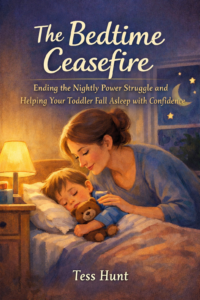
 If bedtime in your home feels like a nightly negotiation summit hosted by someone under three feet tall, The Bedtime Ceasefire by Tess Hunt was written for you.
This calm, solution-focused parenting guide addresses toddler sleep resistance with a practical, emotionally intelligent framework. Rather than promoting rigid sleep training or permissive routines, Hunt offers a balanced method rooted in sleep science, developmental psychology, and real-life parenting dynamics.
This review explores what the book covers, who it’s best for, and whether it delivers on its promise to end bedtime battles.
Quick Summary
What is this book about?
The Bedtime Ceasefire is a step-by-step guide designed to help parents stop nightly bedtime resistance using gentle structure, consistent routines, and practical scripts.
Who is it for?
Parents of toddlers (ages 2–4) struggling with bedtime battles, stalling tactics, overtiredness, and inconsistent routines.
Does it promote “cry it out”?
No. The approach focuses on calm consistency rather than harsh sleep training methods.
Table of Contents
| Chapter | Title | Focus Area |
|---|---|---|
| 1 | When Tiny Humans Fight Sleep | Why toddlers resist bedtime |
| 2 | The Second Wind and the Overtired Spiral | Sleep science & cortisol effects |
| 3 | The Conversation You Keep Having at 8:32 p.m. | Scripts for bedtime negotiations |
| 4 | The Wind-Down Ritual That Actually Works | Creating a consistent routine |
| 5 | When You’re Not on the Same Page | Co-parent alignment strategies |
| 6 | Your 14-Day Bedtime Reset | Step-by-step implementation plan |
| 7 | When Sleep Falls Apart Again | Handling regressions & disruptions |
| Appendix | Keep Growing, One Peaceful Night at a Time | Additional parenting resources |
What Makes This Book Different?
1. It Explains the Science Behind Bedtime Resistance
One of the strongest aspects of The Bedtime Ceasefire is how it explains toddler sleep resistance in simple, reassuring language.
The book covers:
- The “second wind” caused by cortisol spikes
- Why overtired toddlers act hyper
- How melatonin responds to light exposure
- Why consistency reduces anxiety at night
Instead of labeling children as defiant, Hunt reframes bedtime resistance as nervous system dysregulation. This reduces parent guilt and increases confidence.
2. It Provides Ready-to-Use Scripts
Many parenting books explain theory but leave parents unsure what to say in the moment. This book solves that problem by including repeatable bedtime scripts such as:
- “It’s bedtime. I love you. I’ll see you in the morning.”
- “Water is finished for tonight.”
- “I can’t wait to hear that story in the morning.”
These scripts are intentionally brief and emotionally neutral, helping prevent accidental reinforcement of stalling behaviors.
For exhausted parents, this practical feature alone adds significant value.
3. The 14-Day Reset Plan Is Realistic
Chapter 6 outlines a structured two-week bedtime reset plan.
Instead of vague advice, the book breaks down:
- What to expect on nights 1–3 (extinction bursts)
- When resistance usually decreases
- How to prevent backsliding
- How to adjust bedtime timing safely
The plan is simple enough to follow but detailed enough to feel supportive. Importantly, it prepares parents emotionally for temporary escalations — which increases follow-through success.
4. It Addresses Co-Parent Conflict
A standout section is Chapter 5, which discusses the common issue of one parent “giving in.”
Rather than shaming either partner, the book frames:
- The empathetic parent
- The long-term thinking parent
as two loving approaches that need alignment.
It provides practical tools such as written bedtime agreements and role-switching during tough nights. This relational component makes the book especially valuable for couples.
Strengths of The Bedtime Ceasefire
- Clear, step-by-step structure
- Emotionally validating tone
- Strong sleep science foundation
- Practical scripts and tools
- Realistic expectations for setbacks
- Balanced approach (not extreme sleep training)
Who Should Read This Book?
This book is ideal for:
- Parents of toddlers resisting bedtime
- Families stuck in “one more story” cycles
- Couples arguing about sleep routines
- Parents wanting gentle but firm sleep solutions
- Caregivers looking for predictable wind-down rituals
It may be less relevant for:
- Parents of newborns
- Families seeking strict cry-it-out methods
- Advanced pediatric sleep specialists
Why does my toddler fight sleep every night?
Toddlers resist bedtime due to separation anxiety, overtiredness, increased autonomy, and inconsistent routines.
What is the best bedtime routine for toddlers?
A predictable 20–30 minute wind-down ritual with dim lights, calm activities, and a consistent goodnight phrase works best.
Does earlier bedtime reduce tantrums?
Yes. Earlier bedtimes can prevent cortisol spikes caused by overtiredness, leading to smoother transitions.
How do I stop bedtime negotiations?
Use a short, repeatable script and respond consistently without adding new incentives.
What if my toddler’s sleep regresses?
Return to the established routine quickly after illness, travel, or disruptions. Regression does not erase progress.
Final Verdict
The Bedtime Ceasefire succeeds because it combines empathy with structure.
It doesn’t promise instant perfection. Instead, it offers a calm leadership model that reduces bedtime chaos over time. Parents leave with scripts, a plan, and — perhaps most importantly — renewed confidence.
If bedtime has become the most exhausting part of your day, this book provides a steady path forward.
Frequently Asked Questions (FAQ)
Is this book based on sleep science?
Yes. It explains melatonin production, cortisol spikes, and overtiredness patterns in accessible language.
Is this book anti–cry it out?
It does not promote harsh cry-it-out methods. It supports calm consistency with optional brief check-ins.
How long does the 14-day reset take to work?
Many families see improvements between days 4–7, with stronger stability by the end of two weeks.
Can this work for strong-willed toddlers?
Yes. The approach is especially helpful for children who test boundaries, as it removes negotiation variability.
Does this help with night wakings?
Yes. While focused on bedtime resistance, the principles of predictability and calm response apply to night wakings as well.