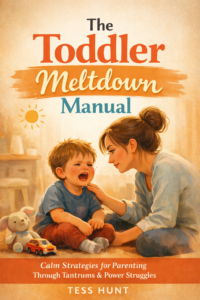
 Book Length: 40 Pages
Author: Tess Hunt
Category: Parenting / Babies & Toddlers / Positive Discipline
If you’re searching for a practical, emotionally supportive guide on how to handle toddler tantrums without yelling, The Toddler Meltdown Manual delivers exactly what overwhelmed parents need: clarity, calm strategies, and developmentally grounded insight.
This 40-page parenting guide focuses on children ages 1–4 and offers science-informed, connection-based tools for managing meltdowns, aggression, bedtime resistance, and public outbursts — without shame, threats, or permissive parenting.
Unlike many toddler discipline books that lean heavily on theory or rigid systems, Tess Hunt writes in a warm, judgment-free tone that speaks directly to real-life parenting stress.
What Is The Toddler Meltdown Manual About?
At its core, this book answers one central question:
How do you respond to toddler tantrums in a way that teaches emotional regulation instead of escalating power struggles?
The author explains that toddler meltdowns are not signs of manipulation or defiance but expressions of neurological immaturity. With the prefrontal cortex still under development, toddlers lack impulse control and emotional regulation skills — meaning their behavior is more about overwhelm than disrespect.
The book teaches parents how to:
- Stay calm during tantrums
- Set firm boundaries without yelling
- Prevent power struggles before they start
- Respond to hitting and biting appropriately
- Repair after losing patience
- Build long-term emotional resilience
This approach blends gentle parenting principles with practical structure — avoiding both harsh discipline and permissiveness.
Table of Contents
Below is the full table of contents for The Toddler Meltdown Manual:
Introduction – Why Toddler Meltdowns Feel So Overwhelming
Chapter 1: When Tiny Humans Have Big Emotions
Explains the neurological reasons behind toddler tantrums and why logic fails during meltdowns.
Chapter 2: The Conversation You’re Having With Yourself
Addresses parental triggers, self-talk, and how your inner voice shapes your reactions.
Chapter 3: The Power Struggle Trap
Teaches how to avoid control battles and use structured choices to increase cooperation.
Chapter 4: The Bedtime Ceasefire
Provides actionable strategies for reducing nighttime meltdowns and separation anxiety.
Chapter 5: Public Meltdowns and Private Shame
Offers guidance on handling tantrums in public without embarrassment or reactive parenting.
Chapter 6: When They Hit, Bite, or Throw
Breaks down toddler aggression and how to correct behavior without shaming.
Chapter 7: The Meltdown After the Meltdown
Focuses on emotional repair, reflection, and building long-term regulation skills.
Appendix: When the Hard Days Feel Heavy
Encouragement and next steps for parents navigating ongoing challenges.
What Makes This Toddler Parenting Book Different?
1. It Focuses on Emotional Regulation, Not Just Behavior
Rather than asking, “How do I stop this behavior immediately?” the book reframes the goal to: “How do I teach my child what to do instead?”
This shift from control to coaching is one of the book’s strongest themes.
2. It Addresses the Parent’s Nervous System
Many toddler books focus solely on child behavior. Tess Hunt acknowledges something often overlooked:
A regulated parent regulates a child.
Chapter 2 specifically explores parental triggers, shame, and internal pressure — making this book as much about parent growth as toddler discipline.
3. It Is Practical and Script-Based
Readers are given actual phrases to use during meltdowns, such as:
- “I won’t let you hit.”
- “You’re really mad.”
- “We’re still leaving.”
These scripts are short and realistic, making them easier to apply in emotionally charged moments.
Who Should Read This Book?
This book is ideal for:
- Parents of toddlers ages 1–4
- Caregivers practicing gentle parenting
- Families struggling with daily tantrums
- Parents who want discipline without yelling
- First-time parents navigating emotional development
It is especially helpful for those searching online for:
- “How to handle toddler tantrums”
- “Why does my toddler hit?”
- “How to stop power struggles with a 3-year-old”
- “Gentle discipline for toddlers”
Is This Book Evidence-Based?
While the book is written in accessible language rather than academic formatting, its framework aligns with established child development research on:
- Co-regulation
- Brain development in early childhood
- Attachment security
- Emotion coaching
It translates developmental science into real-life parenting tools without overwhelming readers with jargon.
Strengths of The Toddler Meltdown Manual
- Clear, compassionate tone
- Practical scripts and step-by-step frameworks
- Emphasis on emotional repair
- Short, digestible chapters
- Balanced approach to boundaries
The book’s greatest strength is that it reassures parents without excusing harmful behavior. It communicates that big emotions are normal — but hurtful actions still require firm limits.
Frequently Asked Questions (FAQ)
What age is this book best for?
This book is designed for parents of children ages 1–4, covering early toddlerhood through preschool years.
Does this book promote gentle parenting?
Yes, but with structure. It supports connection-based discipline while maintaining clear boundaries.
Does it help with hitting and biting?
Yes. Chapter 6 specifically addresses aggression, explaining why toddlers hit and how to correct it calmly and effectively.
Is this book helpful for public tantrums?
Yes. Chapter 5 focuses entirely on handling meltdowns in public without embarrassment or overreaction.
How long is the book?
The book is 40 pages, making it concise and actionable without overwhelming busy parents.
Is this book more theory or practical advice?
It leans heavily toward practical strategies, scripts, and real-life examples.
Final Verdict: Is It Worth Reading?
If you’re looking for a toddler discipline book that helps you stay calm, avoid power struggles, and raise emotionally secure children, The Toddler Meltdown Manual is a strong, accessible resource.
It does not promise perfect behavior.
It does not shame parents for losing patience.
And it does not rely on fear-based discipline.
Instead, it offers steady leadership grounded in emotional awareness — for both parent and child.
For families navigating daily meltdowns, bedtime resistance, public embarrassment, and toddler aggression, this guide provides clarity and reassurance in equal measure.
Parenting toddlers is intense.
This book reminds you that you are not failing.
You are teaching.
And with the right tools, you can lead with confidence instead of frustration.